Back to Journal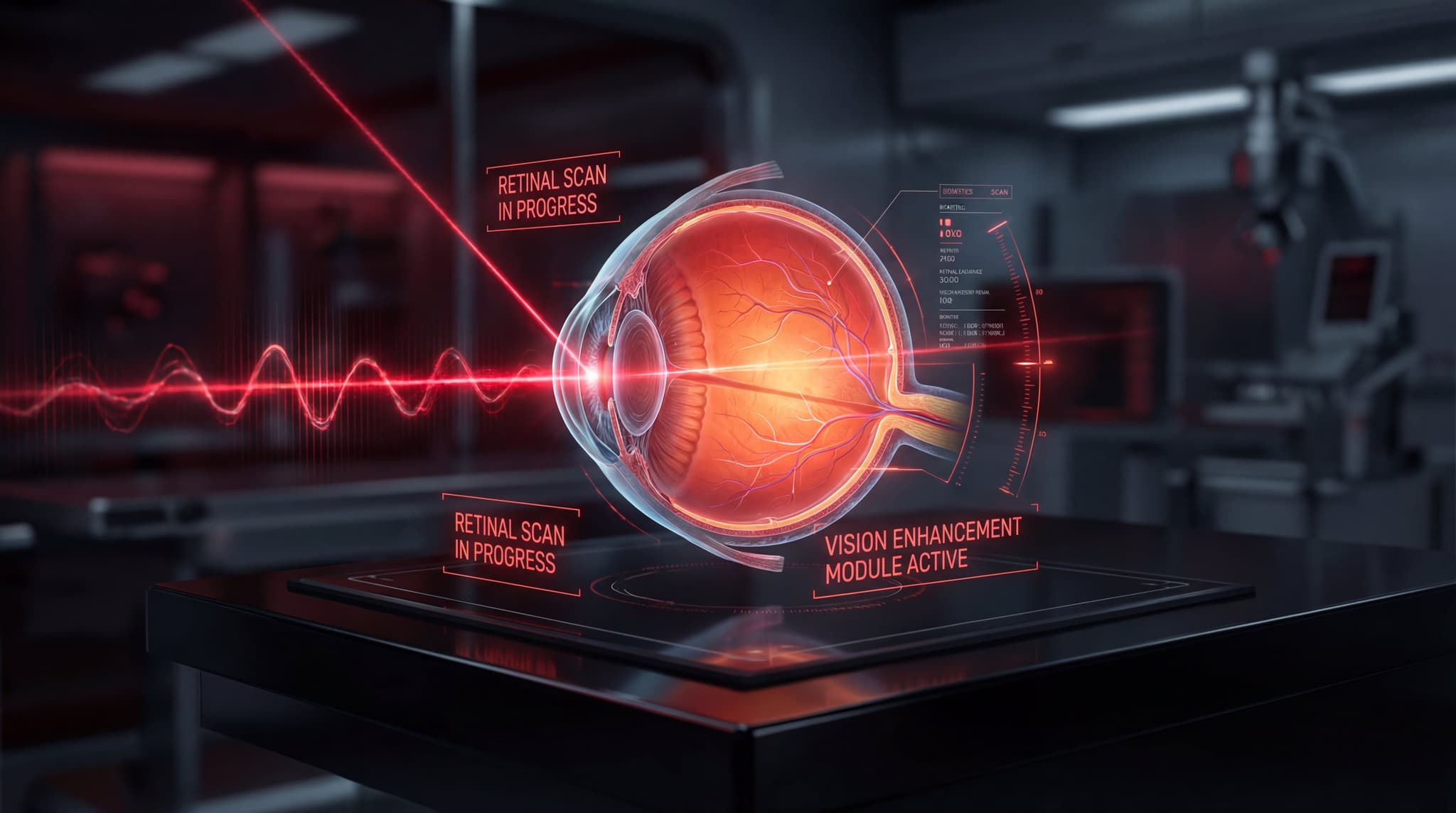
Science•October 22, 2024
Red Light Therapy for Eyes and Vision: Emerging Research
5 min read
This is one of the more interesting emerging areas of research. While still early, studies on using specific wavelengths to support eye health show promising results.
Aging Eyes
The Problem
Age-related decline in visual function is linked to declining mitochondrial function in retinal cells. The retina has extremely high energy demands, and as mitochondria slow down, vision suffers.
Mitochondrial Boost
How Red Light Helps
Red light (particularly 670nm) can penetrate the eye and boost ATP production in retinal cells. This energy boost may help slow or reverse age-related decline.
670nm
Wavelength
Most studied for eyes
+17%
Result
Contrast improvement in study
Studies
Research Findings
- Improved contrast sensitivity in older adults
- Enhanced color vision discrimination
- Potential protective effects against retinal damage
Safety First
Research uses carefully controlled, brief exposures (often 3 minutes). This does NOT mean you should stare at high-intensity panels. High power can be harmful.
Usage
Practical Application
- Morning exposure may be most effective (circadian rhythm)
- Brief exposure (3-5 minutes) appears sufficient
- Indirect light or eyes closed with standard panels is safest
- Consult an ophthalmologist if you have eye conditions
Consider eye benefits a potential bonus rather than a primary reason to buy a high-power panel. The research is promising but precise protocols are still being developed.